- Home
- About Us
- Our Capabilities
- Quality Control
- Featured Products
- Towing and Trailer parts
- Rail Industry
- Electric and Telecom Components
- Construction Machinery and Forklift Components
- Lighting Components
- Components for building and fire equipments
- Motor Components
- Boat Accessories
- Power Tools Components
- Kitchen Equipment Components
- Steel Cabinets
- Other industry components
- Weight Distribution Kits & Components
- Hitch and Couplers
- Hitch Ball Kits & Components
- Fifth Wheel Components
- others
- News
- Send Inquiry
- Contact Us

Why Is Gravity Casting Important in Modern Manufacturing?
Gravity casting, a fundamental process in metalworking, plays a pivotal role in producing high-quality components with precision, durability, and efficiency. As industries push the boundaries of design and material performance, understanding gravity casting becomes critical for engineers, manufacturers, and buyers alike. This comprehensive guide explores every aspect of gravity casting, its benefits, challenges, applications, and why companies like NINGBO UNITED MACHINE CO.,LTD. continue to rely on it for producing exceptional metal products.

Table of Contents
- 1. Gravity Casting Overview
- 2. Gravity Casting Process Explained
- 3. Common Materials Used in Gravity Casting
- 4. Key Advantages of Gravity Casting
- 5. Limitations and Challenges
- 6. Applications Across Industries
- 7. Gravity Casting vs. Other Casting Methods
- 8. Ensuring Quality in Gravity Casting
- 9. Frequently Asked Questions (FAQ)
- 10. Conclusion
1. Gravity Casting Overview
Gravity casting is a traditional and widely used method in metal casting where molten metal is poured into a mold and allowed to fill the cavity under the force of gravity. Unlike high-pressure or centrifugal casting, gravity casting relies solely on natural force, making it simpler, cost-effective, and versatile. This method has been used for centuries to create components ranging from small intricate parts to large industrial items.
Definition
Gravity casting is the process of filling a mold cavity with molten metal, allowing gravity to naturally shape the liquid metal into the desired form without additional pressure or force.
Historical Background
The origins of gravity casting trace back to ancient civilizations, where artisans used sand, clay, or stone molds to produce tools, jewelry, and machinery parts. Over time, innovations in mold materials and techniques have significantly improved precision, consistency, and production speed.
2. Gravity Casting Process Explained
The gravity casting process involves several essential steps that determine the final quality of the metal component.
Step-by-Step Process
- Mold Preparation: Choosing the right mold material (sand, metal, or ceramic) and ensuring it is clean and dry.
- Melting Metal: The selected metal is melted in a furnace to achieve a precise temperature suitable for pouring.
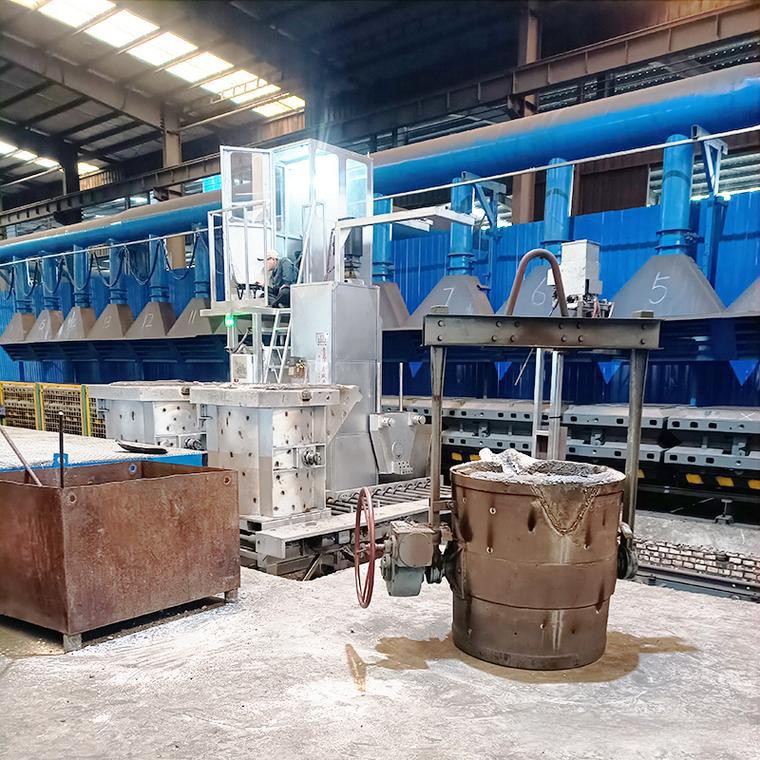
- Pouring: Molten metal is poured carefully into the mold, relying solely on gravity to fill the cavity evenly.
- Cooling: The metal is allowed to solidify naturally within the mold.
- Mold Removal: Once cooled, the mold is removed to reveal the cast part.
- Finishing: Trimming, machining, or polishing the cast component to achieve the desired specifications.
Illustration of Process Flow
| Step | Action | Key Consideration |
|---|---|---|
| 1 | Mold Preparation | Cleanliness, mold strength, design accuracy |
| 2 | Melting Metal | Temperature control, metal type |
| 3 | Pouring | Steady flow, avoiding turbulence |
| 4 | Cooling | Cooling rate, shrinkage control |
| 5 | Mold Removal | Minimize damage to casting |
| 6 | Finishing | Surface quality, dimensional accuracy |
3. Common Materials Used in Gravity Casting
Material selection is crucial in gravity casting as it impacts strength, durability, and appearance. Some widely used materials include:
- Aluminum: Lightweight, corrosion-resistant, ideal for automotive and aerospace parts.
- Steel: High-strength, suitable for industrial machinery and structural components.
- Brass: Excellent corrosion resistance, commonly used in decorative items and plumbing.
- Cast Iron: High wear resistance, perfect for engine blocks and heavy machinery.
- Magnesium: Ultra-lightweight, used in precision electronics and aerospace.
Leading manufacturers such as NINGBO UNITED MACHINE CO.,LTD. have optimized material handling to deliver consistent quality and performance.
4. Key Advantages of Gravity Casting
Gravity casting offers multiple benefits that make it highly attractive for manufacturers:
- Cost-Efficiency: Simple molds and low-pressure pouring reduce equipment costs.
- Versatility: Works with a wide range of metals and alloys.
- Precision: Modern techniques allow for intricate designs and tight tolerances.
- Durability: Produces robust, long-lasting components.
- Environmentally Friendly: Minimal energy usage compared to pressure casting methods.
5. Limitations and Challenges
Despite its advantages, gravity casting has some challenges:
- Slower Production: Gravity alone may slow down filling for complex molds.
- Porosity Risks: Air entrapment can lead to defects if not controlled properly.
- Surface Finish: May require additional finishing for high aesthetic demands.
- Size Constraints: Very large or very thin parts may not fill evenly without specialized molds.
Manufacturers like NINGBO UNITED MACHINE CO.,LTD. use advanced simulation tools to overcome these limitations and maintain high standards.
6. Applications Across Industries
Gravity casting is widely used across industries due to its adaptability:
- Automotive: Engine blocks, transmission housings, and suspension components.
- Aerospace: Lightweight structural components, brackets, and housings.
- Industrial Machinery: Gearboxes, pumps, valves, and machinery bases.
- Construction: Decorative architectural metalwork, supports, and fixtures.
- Consumer Goods: Furniture fittings, cookware, and hardware.
7. Gravity Casting vs. Other Casting Methods
Comparing gravity casting with other popular casting methods helps manufacturers make informed decisions:
| Method | Force Used | Cost | Precision | Best For |
|---|---|---|---|---|
| Gravity Casting | Gravity | Low | Medium-High | Medium complexity parts |
| Die Casting | High Pressure | High | High | Mass production, small parts |
| Centrifugal Casting | Centrifugal Force | Medium | High | Tubular shapes, high density |
| Investment Casting | Gravity / Vacuum | High | Very High | Complex geometries, high accuracy |
8. Ensuring Quality in Gravity Casting
Quality assurance is critical for reliable performance. Key measures include:
- Precise mold design and preparation
- Temperature control during metal melting and pouring
- Defect detection using X-ray or ultrasonic testing
- Controlled cooling to minimize shrinkage and porosity
- Finishing and machining for tight tolerances
NINGBO UNITED MACHINE CO.,LTD. implements strict quality control protocols to deliver components that meet global industry standards.
9. Frequently Asked Questions (FAQ)
Q1: What metals can be used in gravity casting?
A1: Common metals include aluminum, steel, brass, cast iron, and magnesium, each selected based on strength, corrosion resistance, and weight requirements.
Q2: Is gravity casting suitable for mass production?
A2: Gravity casting is cost-effective for small to medium production runs. For very high-volume production, die casting may be more efficient.
Q3: Can gravity casting achieve fine details?
A3: Yes, with precise mold design and careful pouring, intricate details can be achieved, although it may require additional finishing steps.
Q4: How does gravity casting compare with die casting?
A4: Gravity casting uses natural force, is simpler, and has lower initial costs, while die casting uses high pressure, allowing for faster production and tighter tolerances.
Q5: How can defects like porosity be minimized?
A5: Using proper venting, controlled pouring, and optimal cooling techniques helps minimize air entrapment and porosity.
10. Conclusion
Gravity casting remains a cornerstone of modern manufacturing due to its simplicity, cost-effectiveness, and versatility. From automotive and aerospace components to industrial machinery and consumer goods, it delivers reliable performance when executed with precision. Leading companies like NINGBO UNITED MACHINE CO.,LTD. exemplify how advanced techniques, quality control, and material expertise can optimize gravity casting for superior results.
If you are seeking expert guidance and high-quality gravity casting services, don’t hesitate to contact us today and explore how NINGBO UNITED MACHINE CO.,LTD. can support your production needs with precision and efficiency.
Related News
- What Is CNC Milling and How Does It Create Precision Parts for Modern Manufacturing?
- How Can Thermoset Injection Molding Meet Your Custom Component Requirements?
- What Is Zamak Die Casting and How Does It Create Precision Metal Parts?
- What Critical Factors Should You Evaluate When Selecting Sand Casting For Metal Component Manufacturing?
- How Does Sand Casting Shape the Backbone of Modern Metal Manufacturing?
- Welding Guide: How to Select Materials, Machines, Filler Metals and Welding Parameters
Leave me a message