- Home
- About Us
- Our Capabilities
- Quality Control
- Featured Products
- Towing and Trailer parts
- Rail Industry
- Electric and Telecom Components
- Construction Machinery and Forklift Components
- Lighting Components
- Components for building and fire equipments
- Motor Components
- Boat Accessories
- Power Tools Components
- Kitchen Equipment Components
- Steel Cabinets
- Other industry components
- Weight Distribution Kits & Components
- Hitch and Couplers
- Hitch Ball Kits & Components
- Fifth Wheel Components
- others
- News
- Send Inquiry
- Contact Us

Why Is Lost Foam Casting Transforming Modern Manufacturing?
Manufacturers today face increasing pressure to produce complex metal components with higher precision, lower costs, shorter lead times, and reduced material waste. Traditional casting methods often require multiple cores, extensive machining, and complicated mold assemblies, creating challenges for efficiency and consistency.
Lost Foam Casting (LFC) has emerged as a highly effective casting process that addresses many of these issues. By using expendable foam patterns that vaporize during pouring, the process enables the production of intricate metal parts with excellent dimensional accuracy and minimal assembly requirements.
This article explores how Lost Foam Casting works, its advantages, limitations, industrial applications, quality control strategies, and why many manufacturers are increasingly adopting this advanced casting technology.

Table of Contents
- 1. What Is Lost Foam Casting?
- 2. How Does Lost Foam Casting Work?
- 3. Why Is Lost Foam Casting Becoming So Popular?
- 4. Lost Foam Casting vs Traditional Casting Methods
- 5. Which Materials Can Be Used?
- 6. Where Is Lost Foam Casting Commonly Applied?
- 7. How Does Lost Foam Casting Solve Customer Pain Points?
- 8. Quality Control in Lost Foam Casting
- 9. What Challenges Exist in Lost Foam Casting?
- 10. Future Trends in Lost Foam Casting
- 11. Choosing the Right Manufacturing Partner
- 12. Frequently Asked Questions
- 13. Conclusion
1. What Is Lost Foam Casting?
Lost Foam Casting is an evaporative-pattern casting process in which a foam model is used to create the exact shape of the final metal component. Unlike conventional sand casting, where the pattern is removed before pouring molten metal, the foam pattern remains inside the mold.
When molten metal enters the mold cavity, the foam vaporizes and is replaced by metal, resulting in a casting that closely replicates the original foam geometry.
The process is particularly effective for producing:
- Complex geometries
- Thin-wall structures
- Integrated components
- Engine blocks
- Pump housings
- Valve bodies
- Agricultural machinery parts
- Automotive castings
Because the foam pattern directly defines the final shape, manufacturers can achieve excellent design flexibility while reducing machining requirements.
2. How Does Lost Foam Casting Work?
The Lost Foam Casting process follows a carefully controlled sequence:
| Step | Description |
|---|---|
| Pattern Production | Expanded polystyrene foam patterns are manufactured. |
| Assembly | Multiple foam components are glued together. |
| Coating | Refractory coating is applied to improve surface quality. |
| Drying | Coated patterns are dried thoroughly. |
| Sand Filling | Unbonded sand surrounds the pattern. |
| Compaction | Vibration compacts the sand. |
| Metal Pouring | Molten metal replaces the foam. |
| Cooling | The casting solidifies. |
| Cleaning & Inspection | Final finishing and quality checks are performed. |
3. Why Is Lost Foam Casting Becoming So Popular?
Manufacturers worldwide are adopting Lost Foam Casting because it delivers measurable benefits throughout production.
Improved Design Freedom
Complex internal channels, curved surfaces, and integrated structures can be cast as a single piece.
Reduced Machining
Near-net-shape production significantly reduces post-processing operations.
Lower Assembly Costs
Multiple components can often be consolidated into one casting.
Better Dimensional Accuracy
Foam patterns provide highly consistent replication of part geometry.
Material Savings
Less machining means lower metal waste and improved material utilization.
Enhanced Productivity
The elimination of traditional core-making processes simplifies manufacturing workflows.
4. Lost Foam Casting vs Traditional Casting Methods
| Feature | Lost Foam Casting | Traditional Sand Casting |
|---|---|---|
| Pattern Removal | No | Yes |
| Core Requirements | Minimal | Often Extensive |
| Complexity Capability | Excellent | Moderate |
| Surface Finish | Better | Standard |
| Assembly Reduction | High | Limited |
| Tooling Complexity | Moderate | Higher |
5. Which Materials Can Be Used?
Lost Foam Casting supports a wide range of alloys.
- Gray Iron
- Ductile Iron
- Carbon Steel
- Alloy Steel
- Stainless Steel
- Aluminum Alloys
- Copper Alloys
- Bronze
Material selection depends on the application's strength, corrosion resistance, thermal performance, and cost requirements.
6. Where Is Lost Foam Casting Commonly Applied?
Automotive Industry
- Engine blocks
- Cylinder heads
- Transmission housings
- Brake components
Agricultural Equipment
- Gearbox housings
- Pump bodies
- Heavy-duty structural castings
Construction Machinery
- Hydraulic valve blocks
- Excavator components
- Heavy equipment frames
Industrial Equipment
- Compressors
- Pumps
- Industrial machinery housings
Energy Sector
- Turbine parts
- Power generation equipment
- Valve bodies
7. How Does Lost Foam Casting Solve Customer Pain Points?
Customers often encounter several manufacturing challenges:
| Customer Challenge | Lost Foam Casting Solution |
|---|---|
| Complex Geometry | Single-piece integrated casting |
| High Machining Cost | Near-net-shape production |
| Long Lead Time | Simplified mold preparation |
| Assembly Complexity | Part consolidation |
| Material Waste | Reduced machining allowance |
These advantages help manufacturers improve profitability while maintaining product quality.
8. Quality Control in Lost Foam Casting
Consistent quality depends on strict process control.
- Pattern density verification
- Coating thickness inspection
- Sand compaction monitoring
- Pouring temperature control
- Solidification analysis
- Dimensional inspection
- Mechanical property testing
- Non-destructive testing
Advanced foundries increasingly employ simulation software to predict filling behavior and eliminate defects before production begins.
9. What Challenges Exist in Lost Foam Casting?
While highly effective, the process requires proper management.
- Foam pattern quality variations
- Gas generation during pouring
- Coating consistency requirements
- Sand compaction sensitivity
- Process parameter optimization
Manufacturers with strong engineering expertise can successfully overcome these challenges through process validation and continuous improvement.
10. Future Trends in Lost Foam Casting
Several developments are shaping the future of the industry:
- Automation and robotics
- Digital process monitoring
- Casting simulation technology
- Smart manufacturing systems
- Improved foam materials
- Sustainable production practices
- AI-assisted defect prediction
These innovations are helping foundries achieve higher efficiency, lower costs, and improved product consistency.
11. Choosing the Right Manufacturing Partner
Selecting a qualified Lost Foam Casting supplier is critical to project success.
When evaluating suppliers, consider:
- Engineering expertise
- Pattern manufacturing capability
- Quality management systems
- Inspection equipment
- Production capacity
- Industry experience
- Project management support
- Technical communication responsiveness
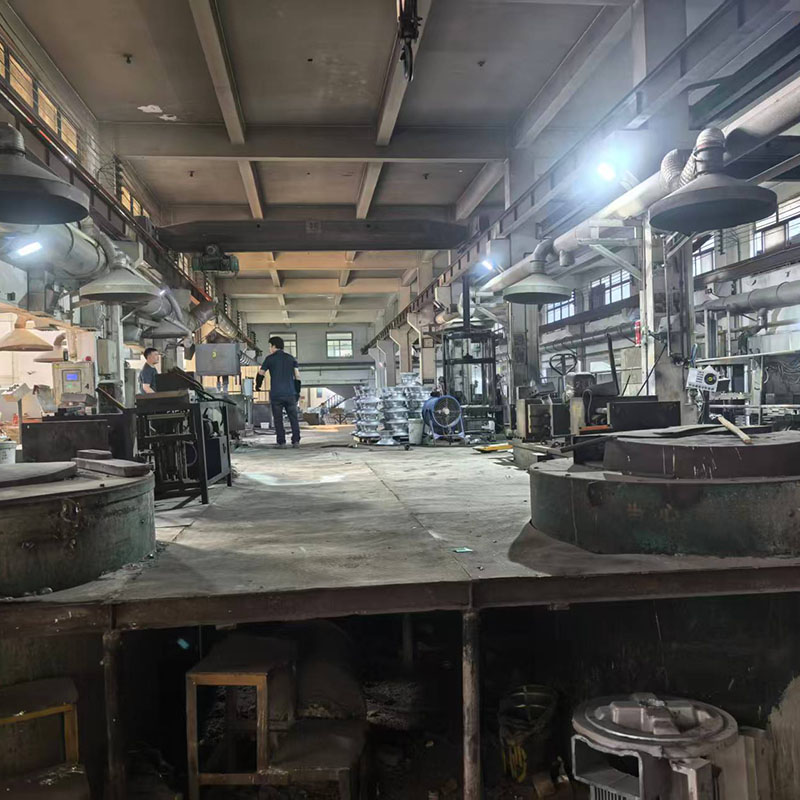
NINGBO UNITED MACHINE CO.,LTD. focuses on delivering high-quality casting solutions for global industrial customers. With extensive manufacturing experience, advanced quality control procedures, and customer-oriented engineering support, the company helps clients develop reliable and cost-effective casting components for demanding applications.
12. Frequently Asked Questions
Q1: Is Lost Foam Casting suitable for large components?
Yes. The process is widely used for both small precision parts and large industrial castings.
Q2: Does Lost Foam Casting reduce machining requirements?
In many cases, yes. Near-net-shape capability can significantly reduce machining operations.
Q3: Which industries benefit most from Lost Foam Casting?
Automotive, agriculture, energy, mining, industrial machinery, and construction equipment sectors commonly use this process.
Q4: Can complex internal passages be produced?
Yes. One of the major strengths of Lost Foam Casting is the ability to create intricate internal geometries.
Q5: Is Lost Foam Casting cost-effective for medium and high production volumes?
Absolutely. The process often delivers substantial cost savings through reduced assembly, machining, and tooling complexity.
Q6: What metals are most commonly cast using this method?
Iron, steel, aluminum, stainless steel, and copper-based alloys are frequently used.
13. Conclusion
Lost Foam Casting has become one of the most innovative and efficient metal casting technologies available today. Its ability to produce highly complex shapes, reduce machining requirements, improve dimensional accuracy, and lower overall manufacturing costs makes it an attractive solution across numerous industries.
As manufacturers continue seeking greater efficiency, product quality, and production flexibility, Lost Foam Casting is expected to play an increasingly important role in modern foundry operations.The engineering team at NINGBO UNITED MACHINE CO.,LTD. is ready to help you optimize designs, improve manufacturability, reduce production costs, and deliver high-quality cast components tailored to your requirements.
Contact us today to discuss your project and discover how our casting expertise can support your business growth.
Related News
- What Is CNC Milling and How Does It Create Precision Parts for Modern Manufacturing?
- How Can Thermoset Injection Molding Meet Your Custom Component Requirements?
- What Is Zamak Die Casting and How Does It Create Precision Metal Parts?
- What Critical Factors Should You Evaluate When Selecting Sand Casting For Metal Component Manufacturing?
- How Does Sand Casting Shape the Backbone of Modern Metal Manufacturing?
- Welding Guide: How to Select Materials, Machines, Filler Metals and Welding Parameters
Leave me a message