- Home
- About Us
- Our Capabilities
- Quality Control
- Featured Products
- Towing and Trailer parts
- Rail Industry
- Electric and Telecom Components
- Construction Machinery and Forklift Components
- Lighting Components
- Components for building and fire equipments
- Motor Components
- Boat Accessories
- Power Tools Components
- Kitchen Equipment Components
- Steel Cabinets
- Other industry components
- Weight Distribution Kits & Components
- Hitch and Couplers
- Hitch Ball Kits & Components
- Fifth Wheel Components
- others
- News
- Send Inquiry
- Contact Us

How Can a High-Quality Knuckle Base Improve Structural Performance and Manufacturing Efficiency
Article Summary: A knuckle base is a precision-engineered component that can play an important role in supporting mechanical assemblies where strength, dimensional stability, and reliable integration are essential. This guide explores the construction, material, die-casting process, key specifications, quality considerations, applications, and procurement factors of a Knuckle Base, using the product information provided by United as a practical reference.
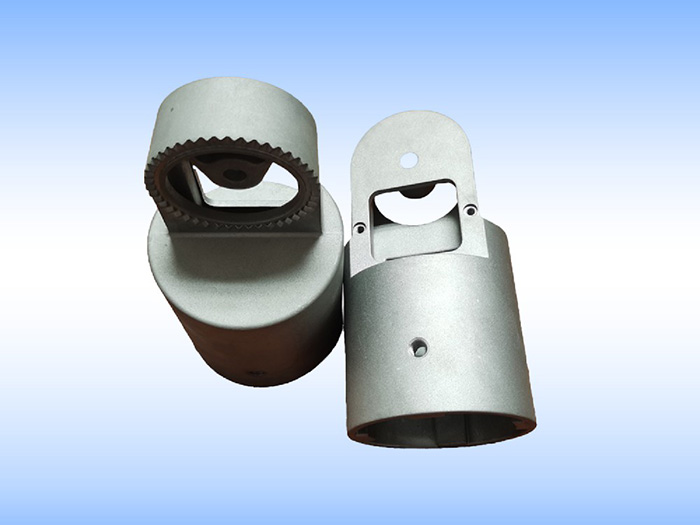
Table of Contents
2. What Are the Key Specifications of a Knuckle Base?
3. Why Is Die Casting Suitable for Knuckle Base Manufacturing?
4. What Are the Main Advantages of an Aluminum Knuckle Base?
5. What Quality Factors Should Buyers Consider?
6. Where Can a Knuckle Base Be Used?
7. How Should Buyers Choose a Knuckle Base Supplier?
What Is a Knuckle Base?
A Knuckle Base is a structural mechanical component designed to serve as a supporting or connecting element within an assembly. Depending on the equipment and mechanical configuration, its geometry may include mounting surfaces, connection points, reinforced sections, or other features that allow it to interface accurately with surrounding components.
For industrial buyers, the value of a knuckle base is not determined by its appearance alone. Its dimensional accuracy, material characteristics, manufacturing process, surface condition, and consistency between production batches can directly affect assembly efficiency and long-term performance.
According to the product information published by United, the featured Knuckle Base is manufactured through die casting and uses aluminum as its primary material. The listed dimensions are 200 × 100 × 100 mm, with a product weight of approximately 2.0 kg. These specifications provide a useful example of how a production-ready component can combine relatively compact dimensions with a lightweight metal construction.
What Are the Key Specifications of a Knuckle Base?
Technical specifications are especially important when purchasing mechanical components for integration into an existing system. Before placing an order, engineers should compare the component's dimensions, material, manufacturing process, weight, tolerances, and interface requirements with the actual assembly drawing.
| Specification | Knuckle Base Reference | Why It Matters |
|---|---|---|
| Manufacturing Process | Die Casting | Supports repeatable production of complex metal geometries |
| Material | Aluminum | Provides a lightweight metal construction with useful mechanical properties |
| Dimensions | 200 × 100 × 100 mm | Defines the overall installation envelope |
| Weight | 2.0 kg | Important for handling, system weight, and assembly planning |
| Application | Mechanical and industrial assemblies | Requires compatibility with the intended equipment and connection structure |
These specifications should be treated as a reference for the featured component rather than universal specifications for every knuckle base. Custom projects may require different dimensions, alloys, tolerances, machining operations, or surface treatments.
Why Is Die Casting Suitable for Knuckle Base Manufacturing?
Die casting is widely used for producing metal components that require repeatable geometry and efficient mass production. In this process, molten metal is injected into a prepared mold under controlled conditions, allowing the material to reproduce the cavity's geometry.
For a component such as a Knuckle Base, die casting can be particularly useful when the design contains multiple surfaces, ribs, bosses, or other geometric features. Compared with manufacturing the entire component from a solid block, a suitable casting design can reduce material waste and improve production efficiency.
Key benefits of die-casting production may include:
- Repeatable geometry: A dedicated mold helps maintain consistent component shape across production runs.
- Efficient production: Once tooling is established, die casting can support repeated manufacturing at commercial volumes.
- Complex feature integration: Multiple geometric features can potentially be formed during the casting process.
- Reduced machining requirements: Near-net-shape production may reduce the amount of material that needs to be removed during secondary machining.
- Consistent appearance: Controlled casting and subsequent finishing can provide a more uniform component surface.
However, die casting does not eliminate the need for engineering validation. Mold design, alloy selection, wall thickness, cooling conditions, dimensional control, and post-casting operations all influence the final product quality.
What Are the Main Advantages of an Aluminum Knuckle Base?
The featured Knuckle Base uses aluminum, making weight-to-function considerations particularly relevant. Aluminum is frequently selected for engineered components where a lower overall component weight is desirable without moving to a non-metallic material.
Lightweight Construction
At approximately 2.0 kg for the referenced 200 × 100 × 100 mm component, the design demonstrates the potential of aluminum construction for reducing component weight. Lower weight can simplify handling and may contribute to overall equipment weight management.
Suitable for Precision Manufacturing
When combined with controlled die casting and appropriate secondary machining, aluminum components can be produced with the dimensional features required for mechanical assembly. Critical mounting or mating areas can be further processed when tighter dimensional control is necessary.
Production Efficiency
For repeat orders, a dedicated die-casting process can provide a practical manufacturing route for producing consistent components. This can be especially valuable for OEMs, equipment manufacturers, and industrial distributors requiring stable supply.
Design Flexibility
Aluminum die casting can accommodate a variety of component geometries. Engineers can therefore consider structural ribs, mounting features, openings, and other design elements when developing or optimizing a knuckle base.
What Quality Factors Should Buyers Consider?
Purchasing a mechanical component should involve more than comparing unit prices. A low-cost component that requires excessive rework, causes assembly problems, or varies between batches can increase the total cost of ownership.
When evaluating a Knuckle Base manufacturer or supplier, buyers should review:
- Material consistency: Confirm that the supplied aluminum material meets the agreed specification.
- Dimensional accuracy: Critical dimensions should be inspected against approved drawings or technical specifications.
- Casting quality: Components should be checked for visible defects that could affect functionality or assembly.
- Machining accuracy: Where secondary machining is required, critical holes, mating surfaces, and interfaces should be properly controlled.
- Batch consistency: Production samples should remain consistent throughout the manufacturing run.
- Packaging: Proper protection is important to prevent scratches, deformation, or impact damage during transportation.
A capable manufacturer should also be able to discuss the production process with the buyer rather than simply provide a quotation. This helps procurement teams understand how the component will be produced, inspected, and delivered.
Where Can a Knuckle Base Be Used?
The exact application of a knuckle base depends on its engineering design and interface requirements. Components of this type can be developed for industrial machinery, mechanical assemblies, equipment structures, and other applications where a compact structural connection is required.
Potential application environments include:
- Industrial machinery assemblies
- Mechanical support structures
- Equipment connection systems
- OEM component assemblies
- Custom engineered machinery
- Replacement and maintenance components
Before selecting a standard or custom component, engineers should verify mounting dimensions, load requirements, environmental conditions, mating components, and installation orientation. A visually similar component is not necessarily a functionally interchangeable component.
How Should Buyers Choose a Knuckle Base Supplier?
For international procurement, supplier capability is just as important as the component itself. Buyers looking for a Knuckle Base manufacturer in China should evaluate manufacturing capabilities, engineering communication, quality control, production capacity, and customization support together.
A reliable sourcing process can include the following steps:
- Provide technical drawings: Share 2D drawings, 3D models, material requirements, and critical tolerances.
- Clarify production requirements: Confirm expected annual volume, batch size, packaging, and delivery requirements.
- Review the manufacturing process: Ask whether die casting, CNC machining, finishing, inspection, and assembly requirements can be supported.
- Request samples: Evaluate the first articles before committing to large-scale production.
- Confirm quality procedures: Establish inspection criteria for dimensions, appearance, material, and functional interfaces.
- Evaluate long-term supply: Consider whether the supplier can maintain stable quality and delivery performance for repeat orders.
United's website identifies a broader manufacturing capability covering processes such as casting, die casting, stamping, machining, welding, forging, sheet metal fabrication, and plastic injection molding. This broader process capability can be valuable when a project involves multiple manufactured components or requires secondary operations.
For buyers comparing suppliers, the best choice is usually the manufacturer that can demonstrate a clear relationship between engineering requirements, manufacturing processes, inspection methods, and final product performance.
FAQ About Knuckle Base
What material is the featured Knuckle Base made from?
The featured Knuckle Base is manufactured from aluminum. Aluminum is suitable for applications where lightweight metal construction is an important consideration.
What manufacturing process is used for this Knuckle Base?
The referenced component is manufactured using die casting. Depending on the final engineering requirements, additional machining or finishing operations may also be considered.
What are the dimensions of the referenced Knuckle Base?
The listed dimensions are 200 × 100 × 100 mm, and the stated weight is approximately 2.0 kg. Buyers should confirm the latest technical drawing before production because custom specifications may differ.
Can a Knuckle Base be customized?
Customization may be possible depending on the required geometry, material, production volume, tooling requirements, and dimensional tolerances. Buyers should provide technical drawings or 3D models so the manufacturer can evaluate feasibility.
What should I provide when requesting a quotation?
For an accurate quotation, provide the component drawing or 3D model, material requirement, annual quantity, surface treatment, critical tolerances, inspection requirements, and preferred packaging. More complete technical information generally allows the supplier to provide a more accurate production proposal.
Conclusion: What Makes a Knuckle Base Worth Choosing?
A high-quality Knuckle Base is more than a simple metal component. Its value comes from the combination of appropriate material selection, reliable die-casting technology, dimensional consistency, quality control, and compatibility with the target assembly. The referenced United component demonstrates a practical configuration using aluminum die casting, with dimensions of 200 × 100 × 100 mm and a weight of approximately 2.0 kg. For OEMs, machinery manufacturers, and industrial buyers, evaluating these factors together can help reduce sourcing risks and improve long-term manufacturing efficiency. If you are looking for a dependable Knuckle Base solution, have technical drawings to review, or need customized production support, contact us to discuss your requirements with the United team and explore a suitable manufacturing solution.
Related News
- How Can Thermoset Injection Molding Meet Your Custom Component Requirements?
- What Is Zamak Die Casting and How Does It Create Precision Metal Parts?
- What Critical Factors Should You Evaluate When Selecting Sand Casting For Metal Component Manufacturing?
- How Does Sand Casting Shape the Backbone of Modern Metal Manufacturing?
- Welding Guide: How to Select Materials, Machines, Filler Metals and Welding Parameters
- How Can a High-Quality Clamping Ring Improve Industrial Component Reliability
Leave me a message