- Home
- About Us
- Our Capabilities
- Quality Control
- Featured Products
- Towing and Trailer parts
- Rail Industry
- Electric and Telecom Components
- Construction Machinery and Forklift Components
- Lighting Components
- Components for building and fire equipments
- Motor Components
- Boat Accessories
- Power Tools Components
- Kitchen Equipment Components
- Steel Cabinets
- Other industry components
- Weight Distribution Kits & Components
- Hitch and Couplers
- Hitch Ball Kits & Components
- Fifth Wheel Components
- others
- News
- Send Inquiry
- Contact Us

How Can Thermoset Injection Molding Meet Your Custom Component Requirements?
When sourcing custom molded components, buyers usually need to confirm more than whether a supplier offers Thermoset Injection Molding. Material selection, part weight, equipment capacity, dimensional requirements, heat resistance, tooling and production consistency all affect whether a molding solution fits the application.
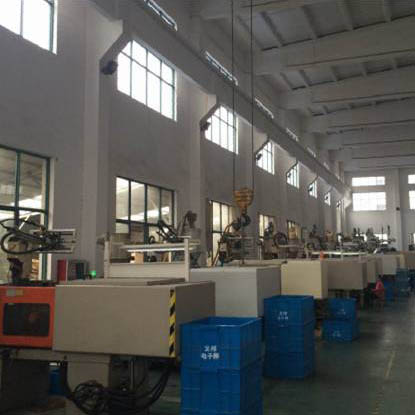
United Machine provides thermoset injection molding solutions using BMC, SMC and PF materials, with equipment ranging from 75 to 730 tons and product weights from 1 gram to 4 kg. These capabilities cover different component sizes and production requirements.
Contents
1. Which Thermoset Materials Can Be Used?
Material selection should start with the working environment and required part performance rather than the molding process alone. United Machine's current thermoset injection molding capability covers BMC, SMC and PF materials.
BMC
Suitable for molded components where dimensional stability, strength and process requirements need to be considered together.
SMC
A thermoset composite option for applications requiring molded structural performance and specific component geometry.
PF
Phenolic material used where heat resistance, chemical stability and electrical performance are important considerations.
2. What Part Sizes and Weights Can Be Produced?
Part weight and mold size are important when buyers are checking whether a molding supplier can handle a new project. United Machine lists a product weight range from 1 gram to 4 kg and an equipment range from 75 to 730 tons.
1 g
Minimum listed product weight
4 kg
Maximum listed product weight
75–730 tons
Listed equipment range
For an RFQ, buyers should provide the estimated part weight or 3D drawing whenever available. This gives the manufacturer a clearer basis for evaluating equipment, mold requirements and production conditions.
3. When Should Buyers Choose Thermoset Instead of Thermoplastic?
The key difference is how the material behaves after curing. Thermoset materials form a cross-linked structure during the molding process and do not soften or melt again in the same way as thermoplastics. This can be important when the finished component must maintain its shape under heat or changing environmental conditions.
Consider thermoset molding when:
01 — The component needs long-term heat resistance.
02 — Dimensional stability is important during temperature or humidity changes.
03 — Chemical resistance is required for the working environment.
04 — The application requires a rigid, permanently cured molded structure.
The appropriate material and process still depend on the actual application, operating temperature, mechanical requirements and component design. A supplier should evaluate these factors before confirming the production process.
4. Can Complex and Precision Components Be Molded?
Thermoset injection molding can be used for complex molded components, including parts such as gears and seals. The current United Machine page identifies automotive, aerospace and other high-precision industrial applications as suitable areas for this type of molding.
For buyers, the important question is not simply whether a supplier can mold a complex shape, but whether the proposed material, mold structure and process can consistently achieve the required dimensions.
Before tooling: confirm the 2D drawing, 3D model, tolerances, surface requirements and critical dimensions.
During mold development: review the parting line, gate arrangement, draft, shrinkage and other mold-related factors.
Before mass production: confirm samples against the approved drawing and application requirements.
5. What Should Buyers Confirm Before Production?
A clear RFQ helps reduce unnecessary back-and-forth during material selection, tooling review and quotation. Buyers can prepare the following project information:
Part Drawing
2D drawing or 3D model with dimensions and tolerances.
2D drawing or 3D model with dimensions and tolerances.
Material
Preferred material or required performance for material selection.
Preferred material or required performance for material selection.
Part Weight
Estimated weight or sample information if available.
Estimated weight or sample information if available.
Annual Demand
Expected order quantity and production frequency.
Expected order quantity and production frequency.
Application
Working temperature, environment and end-use requirements.
Working temperature, environment and end-use requirements.
Quality Requirements
Critical dimensions, appearance and inspection requirements.
Critical dimensions, appearance and inspection requirements.
6. How Is Production Quality Controlled?
For custom molded components, consistent quality depends on control throughout the manufacturing process rather than final inspection alone. United Machine states that its quality management systems include ISO 9001 and IATF 16949, with documented quality control covering processes from raw material purchasing and receiving through final inspection and shipment.
For buyers, the practical point is to identify the dimensions and characteristics that are critical to the finished component and confirm how they will be inspected during sampling and production.
7. FAQ for Thermoset Injection Molding Buyers
What materials does United Machine use for thermoset injection molding?
The current service page lists BMC, SMC and PF as available thermoset materials.
What is the available product weight range?
The listed product weight range is from 1 gram to 4 kg, while the equipment range is 75 to 730 tons.
Why choose thermoset injection molding for high-temperature applications?
Cured thermoset materials maintain their cross-linked structure and can provide heat resistance and dimensional stability for applications where these properties are required. The actual suitability depends on the material and operating conditions.
Can thermoset injection molding produce complex parts?
Yes. The service page identifies complex components such as gears and seals among potential applications. Final feasibility depends on the part geometry, material, tooling and required tolerances.
What information should I send for a thermoset molding quotation?
Providing a part drawing or 3D model, material requirement, estimated part weight, order quantity, application conditions and key quality requirements gives the manufacturer useful information for reviewing the project.
Can thermoset molding be used for industrial components?
Yes. The current service information identifies automotive, aerospace, chemical, electronics and other industrial applications where heat resistance, chemical stability, dimensional stability or complex molding may be required.
Need a Custom Thermoset Injection Molding Solution?
Send your drawing, material requirements and expected order quantity to discuss tooling, equipment suitability and production requirements with United Machine.
Next :
-
Related News
- What Is Zamak Die Casting and How Does It Create Precision Metal Parts?
- What Critical Factors Should You Evaluate When Selecting Sand Casting For Metal Component Manufacturing?
- How Does Sand Casting Shape the Backbone of Modern Metal Manufacturing?
- Welding Guide: How to Select Materials, Machines, Filler Metals and Welding Parameters
- How Can a High-Quality Clamping Ring Improve Industrial Component Reliability
- Normal Stamping: A Cost‑Effective Forming Solution for Batch‑Produced Metal Components
Leave me a message