- Home
- About Us
- Our Capabilities
- Quality Control
- Featured Products
- Towing and Trailer parts
- Rail Industry
- Electric and Telecom Components
- Construction Machinery and Forklift Components
- Lighting Components
- Components for building and fire equipments
- Motor Components
- Boat Accessories
- Power Tools Components
- Kitchen Equipment Components
- Steel Cabinets
- Other industry components
- Weight Distribution Kits & Components
- Hitch and Couplers
- Hitch Ball Kits & Components
- Fifth Wheel Components
- others
- News
- Send Inquiry
- Contact Us

Normal Stamping: A Cost‑Effective Forming Solution for Batch‑Produced Metal Components
Normal Stamping is commonly used when a component has a fixed structure and does not require the tight tolerances associated with precision stamping.
The process uses a press and stamping die to cut or form sheet metal into the required shape. Depending on the part design, several operations can be completed, including blanking, punching, bending, and basic forming.
Where Normal Stamping Fits in Metal Manufacturing
Normal Stamping is generally suitable for metal components with standard dimensional requirements and repeatable production needs. It is particularly useful when the same part needs to be produced in medium or large quantities.
Typical parts include:
- Metal brackets
- Mounting plates
- Connection pieces
- Covers and panels
- Hardware components
- Support parts
- Simple formed metal components
For these applications, stamping can reduce the amount of manual processing required after forming.
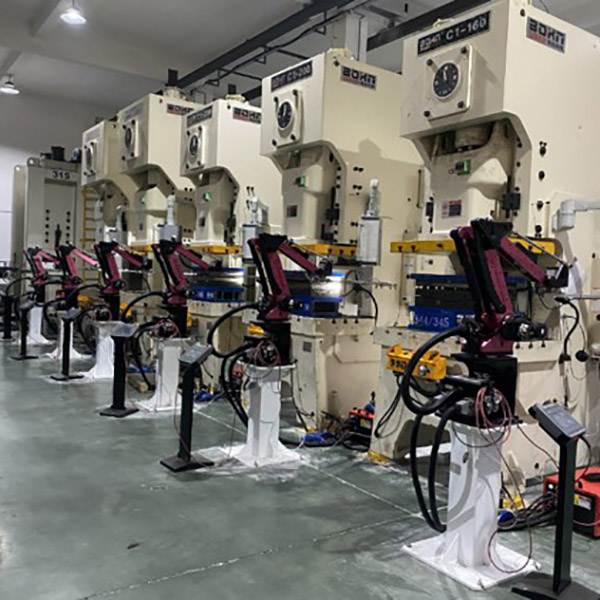
How the Stamping Process Works
A typical production process involves several basic steps.
1. Part and Die Review
Before production starts, the part drawing is reviewed to determine the material, thickness, forming operations, and die structure. The die is then developed according to the required part geometry.
2. Material Preparation
Metal sheets or coils are prepared according to the production requirements. Common materials include:
- Carbon steel
- Stainless steel
- Aluminum
- Copper
- Galvanized steel
Material selection depends on the required strength, corrosion resistance, weight, forming characteristics, and cost.
3. Stamping
The material is positioned in the die and processed using a stamping press. Depending on the part, one or several operations may be required.
| Process | Main Function |
|---|---|
| Blanking | Cuts the required part shape from sheet metal |
| Punching | Creates holes or openings |
| Bending | Forms angles or profiles |
| Forming | Produces a basic three‑dimensional shape |
4. Finishing and Inspection
After stamping, parts may require deburring, cleaning, coating, plating, or other finishing processes. Dimensional inspection is also carried out according to the product requirements.
Why Use Normal Stamping for Batch Production?
One of the main reasons to choose Normal Stamping is its suitability for repeat production.
Once the die has been properly developed and adjusted, the same design can be reproduced over a large production run. This helps maintain consistent part geometry while reducing the amount of manual work involved.
It can also be a practical option when the application does not justify the additional tooling and process control required for precision stamping.
Normal Stamping vs. Precision Stamping
The two processes are not interchangeable for every application.
| Factor | Normal Stamping | Precision Stamping |
|---|---|---|
| Dimensional Requirements | Standard requirements | Tight tolerances |
| Tooling | Conventional stamping dies | More specialized tooling |
| Cost | Generally lower | Generally higher |
| Typical Parts | Brackets, plates, hardware | Precision components |
| Main Consideration | Cost and production efficiency | Dimensional accuracy |
The appropriate process should be selected according to the actual part requirements rather than simply choosing the more advanced process.
What Should Buyers Confirm Before Ordering?
Part Drawing
A complete drawing with dimensions, tolerances, hole locations, and other critical requirements helps the manufacturer evaluate the production method accurately.
Material and Thickness
The material and sheet thickness directly affect die design and forming conditions. These details should be confirmed before tooling begins.
Order Quantity
Tooling involves an initial development cost, so the expected production volume is an important factor when evaluating the overall cost per part.
Surface Requirements
If the finished part requires plating, painting, powder coating, or another surface treatment, this should be included in the project requirements from the beginning.
Inspection Requirements
For parts used in assemblies, important dimensions should be identified in advance so that the manufacturer can establish appropriate inspection procedures.
Common Applications
Normal Stamping can be found in many manufacturing sectors.
- Automotive: brackets, mounting pieces, reinforcement parts, and other sheet‑metal components.
- Electronics: internal supports, covers, mounting plates, and hardware.
- Home Appliances: structural components, panels, and formed metal parts.
- Industrial Equipment: brackets, protective covers, connection parts, and support components.
Related News
- How Can Thermoset Injection Molding Meet Your Custom Component Requirements?
- What Is Zamak Die Casting and How Does It Create Precision Metal Parts?
- What Critical Factors Should You Evaluate When Selecting Sand Casting For Metal Component Manufacturing?
- How Does Sand Casting Shape the Backbone of Modern Metal Manufacturing?
- Welding Guide: How to Select Materials, Machines, Filler Metals and Welding Parameters
- How Can a High-Quality Clamping Ring Improve Industrial Component Reliability
Leave me a message