- Home
- About Us
- Our Capabilities
- Quality Control
- Featured Products
- Towing and Trailer parts
- Rail Industry
- Electric and Telecom Components
- Construction Machinery and Forklift Components
- Lighting Components
- Components for building and fire equipments
- Motor Components
- Boat Accessories
- Power Tools Components
- Kitchen Equipment Components
- Steel Cabinets
- Other industry components
- Weight Distribution Kits & Components
- Hitch and Couplers
- Hitch Ball Kits & Components
- Fifth Wheel Components
- others
- News
- Send Inquiry
- Contact Us

How Can a High-Quality Clamping Ring Improve Industrial Component Reliability
Article Summary: A clamping ring may be a relatively small component, but its dimensional accuracy, material strength, surface protection, and manufacturing consistency can directly influence the reliability of an assembled system. This guide explains how a Clamping Ring is designed and manufactured, what specifications buyers should evaluate, and why stamping, material selection, and surface treatment matter when sourcing components for industrial applications. Based on the product information provided by United, this article also explores practical considerations for selecting a reliable China manufacturer and supplier.
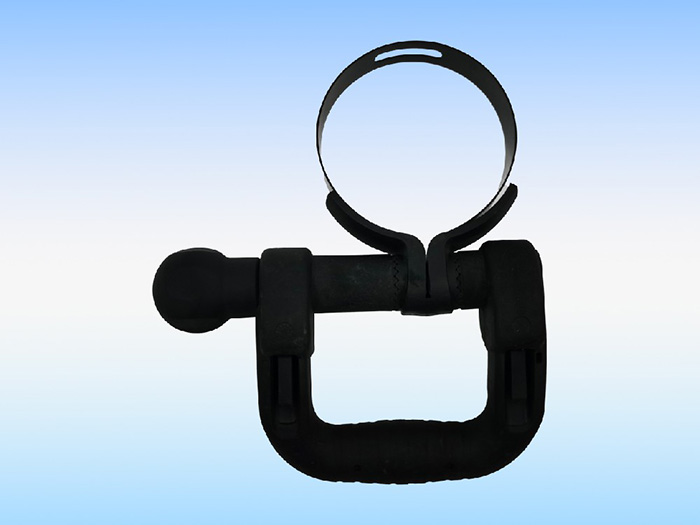
Table of Contents
- What Is a Clamping Ring and What Does It Do?
- What Specifications Matter When Choosing a Clamping Ring?
- How Is a Clamping Ring Manufactured?
- Why Do Material and Surface Treatment Matter?
- How Does Manufacturing Quality Affect Performance?
- Where Are Clamping Rings Commonly Used?
- What Should Buyers Consider When Sourcing Clamping Rings?
- Frequently Asked Questions About Clamping Rings
- Why Choose a Professional Clamping Ring Manufacturer?
What Is a Clamping Ring and What Does It Do?
United's Clamping Ring is a precision metal component manufactured through a stamping process, using 60Mn material and an E-coating surface treatment. The referenced product has a diameter of 137 mm, a thickness of 1.2 mm, and a weight of approximately 0.12 kg. These specifications demonstrate how a relatively lightweight stamped component can be engineered for repeatable assembly and dependable mechanical performance.
In general engineering applications, a clamping ring is designed to hold, secure, position, or reinforce another component within an assembly. Its circular geometry allows forces to be distributed around a mating surface rather than concentrated at a single point.
Depending on the application, a clamping ring may contribute to:
- Secure mechanical positioning of components
- Consistent distribution of clamping forces
- Structural stability during operation
- Reduced movement or displacement between mating parts
- Improved assembly repeatability
- Protection of connected components from excessive movement
Because the ring interacts directly with other components, dimensional consistency is especially important. An incorrect inner or outer diameter, excessive deformation, or inconsistent thickness can affect assembly fit and overall system reliability.
What Specifications Matter When Choosing a Clamping Ring?
Industrial buyers should evaluate more than appearance when selecting a clamping ring. The correct specification depends on the intended application, load conditions, mating components, production volume, and environmental requirements.
| Specification | Reference Clamping Ring | Why It Matters |
|---|---|---|
| Manufacturing Process | Stamping | Supports repeatable production of formed metal components |
| Material | 60Mn | Provides a suitable material basis for stamped mechanical components |
| Surface Treatment | E-coating | Helps improve surface protection and coating consistency |
| Diameter | 137 mm | Determines dimensional compatibility with mating components |
| Thickness | 1.2 mm | Affects stiffness, forming behavior, and assembly characteristics |
| Weight | 0.12 kg | Useful for handling, logistics, and assembly planning |
For customized orders, buyers should also clarify tolerances, drawings, material requirements, coating specifications, packaging, production quantity, and inspection standards before placing an order.
How Is a Clamping Ring Manufactured?
Stamping is particularly suitable for producing metal components where dimensional repeatability and production efficiency are important. According to the referenced United product information, the Clamping Ring is manufactured using stamping.
A typical production workflow can include the following stages:
- Engineering review: Product drawings and dimensional requirements are reviewed before production.
- Material preparation: Appropriate metal stock is selected according to the specified material grade and thickness.
- Tooling preparation: Stamping dies are prepared according to the required ring geometry.
- Stamping and forming: The metal is shaped into the required profile through controlled stamping operations.
- Deburring and finishing: Edges and surfaces are processed to meet the required condition.
- Surface treatment: E-coating or another specified treatment is applied when required.
- Inspection: Critical dimensions, appearance, coating quality, and other requirements are checked before shipment.
The major advantage of a controlled stamping process is consistency. For high-volume industrial orders, repeatable tooling can help manufacturers maintain stable dimensions while improving production efficiency.
Why Do Material and Surface Treatment Matter?
Material selection determines many of the fundamental mechanical characteristics of a clamping ring. The referenced component uses 60Mn, while its surface treatment is E-coating.
For procurement teams, material should not be treated as a secondary specification. The selected material needs to match the required strength, forming characteristics, operating environment, and downstream assembly process.
Surface treatment is equally important. E-coating is an electrocoating process that can provide a consistent protective finish over appropriately prepared metal surfaces. In practical manufacturing, surface treatment may help improve resistance to environmental exposure and support long-term surface durability.
When requesting quotations, buyers should therefore specify:
- Required material grade
- Material thickness
- Surface treatment type
- Coating requirements
- Appearance expectations
- Operating environment
- Required dimensional tolerances
How Does Manufacturing Quality Affect Performance?
A clamping ring must fit correctly with the components around it. Even when the component itself looks simple, variations in diameter, thickness, flatness, hole position, or formed geometry can create assembly problems.
A professional quality-control approach should consider several checkpoints:
| Quality Area | Typical Inspection Focus |
|---|---|
| Dimensional Accuracy | Diameter, thickness, critical features, and tolerances |
| Material Verification | Material grade and incoming material consistency |
| Forming Quality | Deformation, cracks, distortion, and edge condition |
| Surface Quality | Coating coverage, appearance, adhesion, and defects |
| Final Inspection | Overall conformity with drawings and customer requirements |
For customized components, supplying a detailed technical drawing is one of the most effective ways to reduce misunderstandings between the buyer and manufacturer.
Where Are Clamping Rings Commonly Used?
The appropriate application depends on the ring's geometry, material, dimensions, and load requirements. Clamping-type components can be found across many mechanical assemblies where secure positioning is necessary.
Potential application areas include:
- Trailer and towing components
- Mechanical assemblies
- Industrial equipment
- Automotive-related components
- Construction equipment assemblies
- General fabricated metal products
- Custom OEM mechanical assemblies
United's broader manufacturing capabilities include stamping alongside casting, die casting, machining, welding, forging, sheet metal fabrication, and plastic injection molding. This combination can be useful for customers sourcing multiple types of industrial components from one manufacturing partner.
What Should Buyers Consider When Sourcing Clamping Rings?
Choosing a suitable supplier is about more than comparing unit prices. For OEM and industrial procurement, the supplier's engineering capability, process control, production consistency, and ability to follow technical documentation can significantly affect total purchasing cost.
1. Confirm the Technical Drawing
Before quotation, provide the latest drawing with dimensions, tolerances, material, surface treatment, and special requirements.
2. Evaluate the Manufacturing Process
Ask whether the supplier has the appropriate stamping equipment, tooling experience, and inspection capabilities for the required component.
3. Review Material and Coating Requirements
Material substitutions should not be made without approval. The same applies to surface treatment, especially when corrosion resistance or appearance is important.
4. Consider Production Volume
For recurring orders, stamping can be advantageous because dedicated tooling can support repeatable production. Buyers should evaluate tooling costs against expected order volume and product life cycle.
5. Assess Quality-Control Procedures
Ask about incoming material inspection, in-process checks, final inspection, dimensional measurement, and documentation. These factors help reduce the risk of inconsistent batches.
6. Compare Total Procurement Value
A reliable supplier should be evaluated through a combination of price, quality, lead time, customization capability, packaging, communication, and after-sales support rather than unit price alone.
Frequently Asked Questions About Clamping Rings
What is a clamping ring?
A clamping ring is a circular mechanical component designed to secure, position, reinforce, or hold another component within an assembly. Its exact function depends on the application and engineering design.
What material is used for the referenced Clamping Ring?
The referenced United Clamping Ring is made from 60Mn material. The product specifications list a 137 mm diameter, 1.2 mm thickness, and approximately 0.12 kg weight.
How is the Clamping Ring manufactured?
The referenced product is manufactured through stamping. Stamping is well suited to repeatable production of formed metal components when appropriate tooling and process controls are used.
What surface treatment does the Clamping Ring use?
The referenced product uses E-coating as its surface treatment. Buyers requiring different environmental or appearance specifications should confirm the coating requirements with the manufacturer before production.
Can a Clamping Ring be customized?
Customization can generally be evaluated according to the required drawing, material, dimensions, tolerances, forming requirements, surface treatment, and production quantity. Buyers should provide complete technical documentation when requesting a customized quotation.
Why Choose a Professional Clamping Ring Manufacturer?
A high-quality Clamping Ring is the result of coordinated engineering, material selection, precision stamping, surface treatment, and quality inspection. The reference specification from United demonstrates a clearly defined manufacturing solution based on 60Mn material, stamping, E-coating, a 137 mm diameter, and 1.2 mm thickness.
For industrial buyers looking for a dependable China manufacturer or supplier, the best sourcing strategy is to evaluate technical capability and quality consistency alongside price. Whether you require a standard component or an OEM design, clear drawings and specifications allow the manufacturer to provide a more accurate production and quotation solution.
Looking for a reliable Clamping Ring solution for your next project? Share your drawings, material requirements, dimensions, surface-treatment specifications, and expected order quantity with United. Contact us today to discuss your requirements and develop a practical, production-ready solution for your industrial application.
Related News
- How Can Thermoset Injection Molding Meet Your Custom Component Requirements?
- What Is Zamak Die Casting and How Does It Create Precision Metal Parts?
- What Critical Factors Should You Evaluate When Selecting Sand Casting For Metal Component Manufacturing?
- How Does Sand Casting Shape the Backbone of Modern Metal Manufacturing?
- Welding Guide: How to Select Materials, Machines, Filler Metals and Welding Parameters
- Normal Stamping: A Cost‑Effective Forming Solution for Batch‑Produced Metal Components
Leave me a message