- Home
- About Us
- Our Capabilities
- Quality Control
- Featured Products
- Towing and Trailer parts
- Rail Industry
- Electric and Telecom Components
- Construction Machinery and Forklift Components
- Lighting Components
- Components for building and fire equipments
- Motor Components
- Boat Accessories
- Power Tools Components
- Kitchen Equipment Components
- Steel Cabinets
- Other industry components
- Weight Distribution Kits & Components
- Hitch and Couplers
- Hitch Ball Kits & Components
- Fifth Wheel Components
- others
- News
- Send Inquiry
- Contact Us

How Does a High-Quality Crank Improve Mechanical Performance and Production Efficiency
United specializes in precision mechanical components designed for demanding industrial applications, and the Crank is one of the most critical transmission parts for converting rotary motion into reciprocating motion. Manufactured with precision machining, strict quality inspection, and durable materials, modern crank components help improve equipment stability, reduce maintenance costs, and extend service life across automotive, agricultural, compressor, pump, and industrial machinery applications.
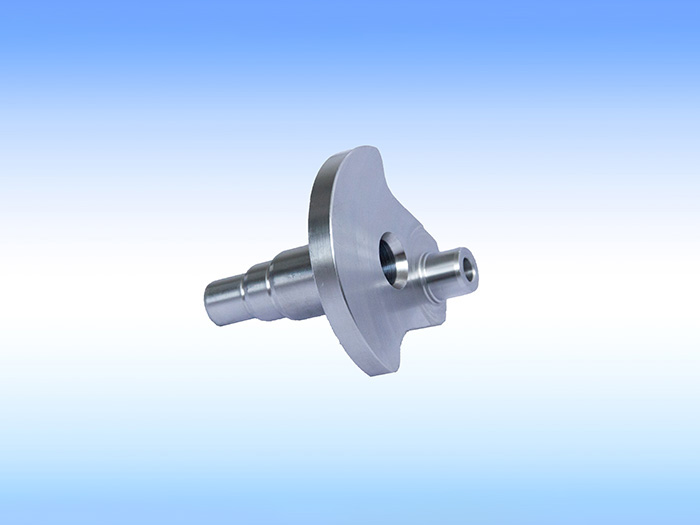
A crank is a fundamental mechanical component responsible for transmitting power and converting rotational movement into linear motion. Although simple in appearance, its manufacturing accuracy directly affects machine efficiency, vibration control, operational lifespan, and production reliability. This guide explores crank structure, working principles, manufacturing technologies, application industries, material selection, maintenance recommendations, and purchasing considerations.
Contents
- Understanding How a Crank Works
- Main Components of a Crank
- Common Materials Used for Manufacturing
- Precision Manufacturing Process
- Industrial Applications
- Benefits of Choosing a Precision Crank
- Comparison Table
- How to Select the Right Crank
- Maintenance Tips
- Frequently Asked Questions
Understanding How a Crank Works
The crank is one of the oldest and most efficient mechanical transmission mechanisms ever developed. Its primary function is to convert rotary motion into reciprocating motion—or vice versa—allowing energy to be transferred efficiently throughout a mechanical system.
When connected to a shaft and a connecting rod, the crank rotates continuously while driving linear movement. This principle has been widely adopted in engines, compressors, pumps, forging presses, packaging machinery, textile equipment, agricultural machines, and numerous automated production systems.
Because the crank experiences continuous cyclic loading during operation, both material strength and dimensional accuracy are critical. Even slight machining deviations can lead to increased vibration, excessive bearing wear, energy loss, or premature mechanical failure.
Key Functions- Convert rotary motion into reciprocating movement
- Transmit torque efficiently
- Maintain synchronized mechanical motion
- Reduce transmission energy loss
- Improve equipment operating stability
Main Components of a Crank
Although crank designs vary depending on industry requirements, most products share several essential structural elements that work together to achieve reliable mechanical transmission.
| Component | Function |
|---|---|
| Crank Pin | Connects with the connecting rod and transfers movement. |
| Main Journal | Supports rotational movement inside bearings. |
| Counterweight | Balances rotating mass and minimizes vibration. |
| Oil Passage | Ensures continuous lubrication during operation. |
| Fillet Radius | Reduces stress concentration and extends fatigue life. |
Every structural feature contributes to the overall durability and operating efficiency of the crank. Precision balancing and accurate machining significantly reduce operational noise while improving rotational stability during high-speed applications.
Common Materials Used for Manufacturing
Selecting the appropriate material is essential because the crank must withstand repeated dynamic loads while maintaining dimensional stability over millions of operating cycles.
- Forged Alloy Steel — Excellent fatigue strength and impact resistance for heavy-duty machinery.
- Carbon Steel — Cost-effective solution suitable for medium-load industrial equipment.
- Ductile Iron — Provides outstanding vibration damping and machining performance.
- Stainless Steel — Preferred for food processing, pharmaceutical, and corrosive environments.
- Special Alloy Materials — Used in aerospace, high-speed automation, and customized precision equipment requiring exceptional mechanical performance.
Material selection should always consider operating speed, load conditions, environmental exposure, lubrication requirements, and expected service life to ensure maximum reliability.
Precision Manufacturing Process
Modern crank production combines advanced CNC machining, precision forging, automated inspection, and rigorous quality control to deliver components capable of long-term, high-load operation.
The manufacturing process typically begins with carefully selected raw materials, followed by forging or casting depending on application requirements. CNC machining then achieves highly accurate dimensions for journals, crank pins, and bearing surfaces.
After machining, heat treatment processes such as quenching, tempering, or induction hardening improve hardness, fatigue resistance, and wear performance. Grinding and polishing ensure smooth surface finishes that minimize friction during continuous operation.
- Raw material inspection
- Precision forging or casting
- CNC turning and milling
- Heat treatment
- Precision grinding
- Dynamic balancing
- Coordinate measurement inspection
- Final quality testing and packaging
Industrial Applications
Because of its ability to convert motion efficiently while withstanding continuous cyclic loads, the crank has become an indispensable component across numerous industries. From heavy-duty manufacturing equipment to precision automation systems, a properly engineered crank contributes to stable operation, higher productivity, and lower maintenance costs.
Modern manufacturers also customize crank dimensions, stroke length, balancing methods, and materials according to different operating environments, enabling OEM and replacement solutions for a wide variety of machinery.
Typical Application Industries- Automotive engines and transmission systems
- Air compressors and refrigeration compressors
- Industrial water pumps and hydraulic equipment
- Packaging and filling machinery
- Agricultural machinery and harvesting equipment
- Mining and construction machinery
- Textile and printing machines
- Food processing equipment
- Pharmaceutical manufacturing systems
- General industrial automation equipment
Regardless of the application, a precision-manufactured crank helps reduce vibration, maintain synchronized movement, and improve equipment reliability under both low-speed and high-speed operating conditions.
Benefits of Choosing a Precision Crank
Purchasing a high-quality crank is not simply replacing a mechanical component—it is an investment in machine efficiency, operational safety, and long-term production stability. Manufacturers that adopt advanced machining technologies and strict inspection standards consistently deliver components capable of exceeding demanding industrial expectations.
- High dimensional accuracy ensures perfect assembly.
- Improved fatigue strength extends operational lifespan.
- Excellent dynamic balancing reduces vibration and noise.
- Superior surface finishing minimizes friction and wear.
- Stable mechanical performance lowers maintenance frequency.
- Consistent manufacturing quality supports mass production.
- Compatible with OEM customization requirements.
- Suitable for continuous industrial operation.
These advantages directly translate into improved production efficiency, reduced downtime, and lower overall ownership costs for industrial users worldwide.
Comparison Table
| Feature | Precision Crank | Standard Crank |
|---|---|---|
| Machining Accuracy | Very High | Moderate |
| Fatigue Resistance | Excellent | Average |
| Dynamic Balance | Optimized | Basic |
| Service Life | Long | Standard |
| Maintenance Cost | Lower | Higher |
| Production Stability | Excellent | Acceptable |
While precision cranks generally involve a higher initial investment, their superior durability and lower maintenance requirements often provide significantly greater value throughout the equipment lifecycle.
How to Select the Right Crank
Selecting the appropriate crank requires evaluating more than dimensions alone. Buyers should carefully assess operating conditions, equipment specifications, and long-term production requirements before making a purchasing decision.
The following considerations help ensure optimal performance:
- Confirm shaft dimensions and installation tolerances.
- Select materials based on load capacity and operating environment.
- Review required fatigue life and rotational speed.
- Verify balancing accuracy for high-speed machinery.
- Check heat treatment standards and hardness specifications.
- Evaluate supplier manufacturing capabilities and inspection systems.
- Ensure OEM customization is available if required.
- Consider after-sales technical support and replacement availability.
Working with an experienced manufacturer allows buyers to receive customized engineering recommendations based on actual application conditions, reducing procurement risks while improving overall equipment performance.
Maintenance Tips
Even the highest-quality crank requires proper maintenance to maximize operational lifespan. Preventive maintenance not only protects the crank itself but also safeguards bearings, connecting rods, shafts, and surrounding transmission components.
- Maintain adequate lubrication during operation.
- Inspect bearing clearance regularly.
- Monitor vibration and abnormal operating noise.
- Replace worn seals before contamination occurs.
- Check fastening torque during scheduled maintenance.
- Avoid operating beyond designed load limits.
- Inspect for surface cracks during major overhauls.
- Follow manufacturer maintenance schedules.
Routine inspection and preventive servicing significantly reduce unexpected failures while helping maintain consistent machine performance over extended production cycles.
Frequently Asked Questions
What is the primary function of a crank?
A crank converts rotary motion into reciprocating motion or vice versa. It serves as a critical power transmission component in engines, pumps, compressors, industrial machinery, and numerous automated production systems where efficient motion conversion is essential.
Which material is best for manufacturing a crank?
The ideal material depends on the application. Forged alloy steel is widely preferred for heavy-duty industrial machinery because of its outstanding strength and fatigue resistance. Stainless steel is suitable for corrosive environments, while ductile iron provides excellent vibration damping for general mechanical equipment.
How can I determine whether a crank is high quality?
A high-quality crank features precision machining, excellent dynamic balancing, accurate dimensional tolerances, high-quality raw materials, proper heat treatment, and comprehensive quality inspections. Products manufactured under strict quality control standards generally deliver longer service life and improved operational stability.
Can cranks be customized for OEM equipment?
Yes. Professional manufacturers typically offer OEM and ODM customization services, including dimensional modifications, material selection, surface treatment, balancing requirements, and special machining processes to meet unique equipment specifications.
How often should a crank be inspected?
Inspection frequency depends on operating conditions. For continuously running industrial equipment, routine inspections during scheduled maintenance intervals are recommended. Regular lubrication checks, vibration monitoring, and wear inspections help maximize service life and minimize unexpected downtime.
Conclusion
The crank remains one of the most important mechanical transmission components in modern industry. From automotive systems and compressors to automated production equipment and agricultural machinery, its ability to convert motion efficiently has made it indispensable across countless applications. By selecting premium materials, precision manufacturing processes, and reliable suppliers, businesses can significantly improve equipment performance, reduce maintenance costs, and achieve greater long-term productivity. Investing in a high-quality crank is not simply purchasing a replacement part—it is investing in operational reliability and sustainable manufacturing efficiency.
Ready to improve your equipment performance? Contact us today to discuss your requirements, request a quotation, or learn more about our customized manufacturing capabilities. Our team looks forward to helping you find the ideal solution for your application.
Related News
- What Is CNC Milling and How Does It Create Precision Parts for Modern Manufacturing?
- How Can Thermoset Injection Molding Meet Your Custom Component Requirements?
- What Is Zamak Die Casting and How Does It Create Precision Metal Parts?
- What Critical Factors Should You Evaluate When Selecting Sand Casting For Metal Component Manufacturing?
- How Does Sand Casting Shape the Backbone of Modern Metal Manufacturing?
- Welding Guide: How to Select Materials, Machines, Filler Metals and Welding Parameters
Leave me a message